Care Guide · September 2026 · 6 min
How to Make a Handmade Bar Last Longer
Handmade soap rewards a little care. Six habits — drainage, cutting, rotation, and storage — that stretch a single bar considerably further.
The most common complaint about handmade soap is that it disappears too quickly — and almost every time, the bar is not the problem. It is the shower shelf.
Handmade soap keeps its glycerin, and glycerin attracts water. That is part of what makes the lather feel the way it does, and it also means a bar left sitting in a puddle will soften and dissolve. Fix the water, and the same bar lasts dramatically longer.
1. Let it drain and let it dry
This is the whole game. A bar needs to dry out completely between showers. Sitting in a flat, closed dish, or in a recessed tile shelf that pools water, it never gets the chance.
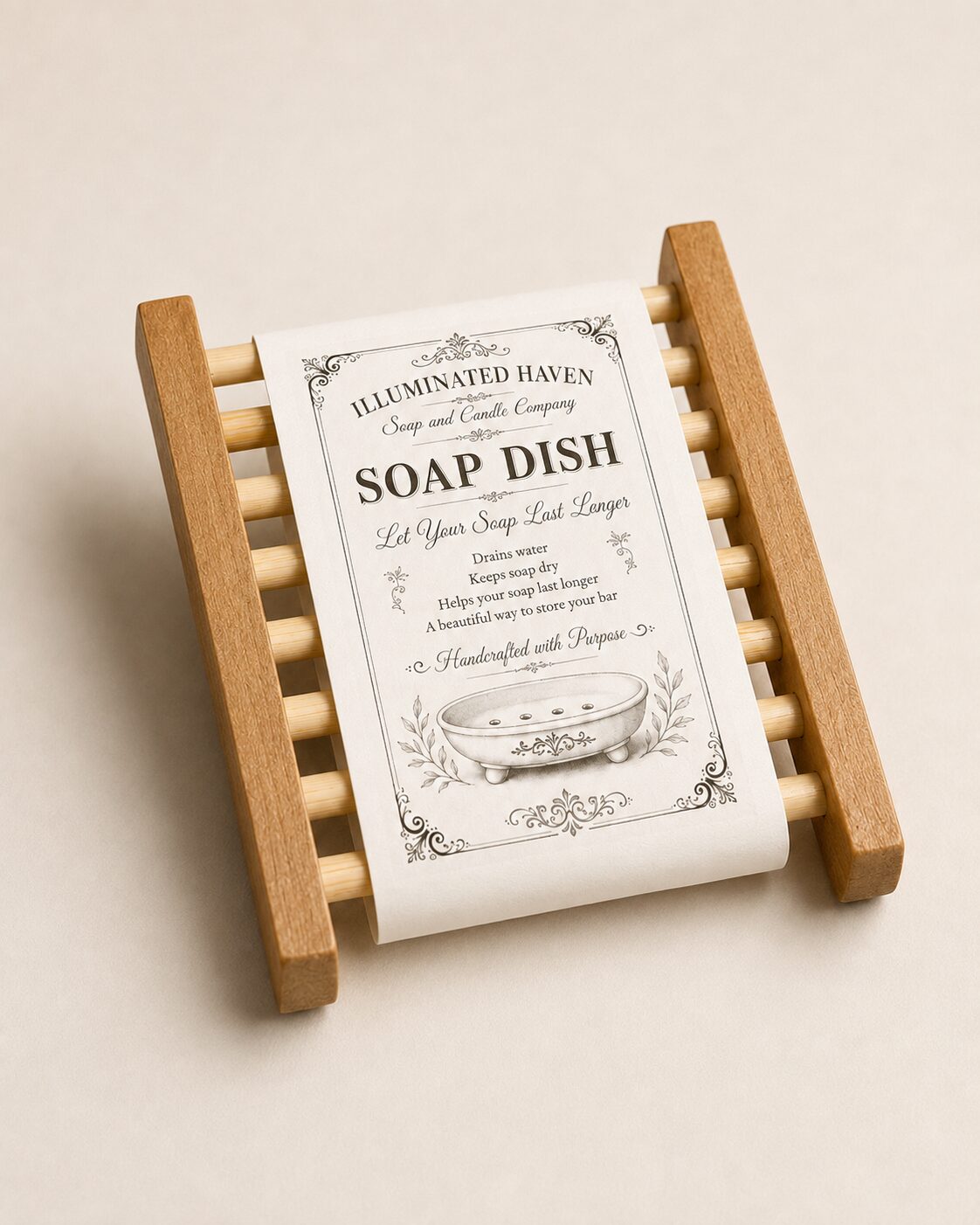
Use a slatted or ridged dish that lets air reach the underside. Our bamboo soap dish was made for exactly this, but any dish that drains and does not trap water underneath will do the job.
2. Keep it out of the direct spray
A bar parked where the shower stream hits it is being slowly rinsed away for the whole length of your shower. Move it to the far end of the shelf, into a corner, or outside the enclosure entirely on a dish by the sink. This single change is worth more than any product.
3. Cut a large bar in half
Use one half, store the other somewhere dry. The half in use is smaller, so it stays drier and holds its shape better, and the half in reserve keeps curing — which makes it harder and longer-lasting by the time you get to it.
A kitchen knife works fine. Handmade soap cuts cleanly at room temperature.
4. Rotate two bars
Keep two bars going and alternate them. Each gets a full day or more to dry out completely, which is more than most bars ever get. Two rotated bars will outlast two bars used one after the other, and it costs nothing to try.
5. Store the rest of your bars in open air
Do not seal spare bars in plastic or a closed container. They want a linen closet, a dresser drawer, or an open basket, somewhere cool and dry with air moving around them. They will keep hardening and their fragrance will fill the space, which is a small bonus.
Wrapped or unwrapped is fine — just not airtight.
6. Use a washcloth, and use the ends
A washcloth or a bath pouf builds a full lather from far less soap than rubbing the bar straight onto skin. It also keeps the bar out of the water longer.
When a bar wears down to a thin sliver, press it onto the flat face of a fresh bar while both are damp. They fuse as they dry. Or collect the last slivers in a pouf and use them as a bundle. Nothing needs to go in the bin.
What is normal, and what is not
A little softening on the surface after a shower is normal and firms back up as the bar dries. Deepening color as a bar ages is normal, especially along the bottom edge of a freshly cut bar. Fragrance mellowing over months is normal.
A bar that turns to mush in a week is almost always a drainage problem rather than a soap problem. Move it out of the water and try again before you give up on it.
Common questions
- Should I unwrap my soap right away?
- You can. Handmade soap keeps best in open air, so unwrapping a spare bar and setting it in a drawer or closet is perfectly fine — and it will scent the space while it waits.
- Does a soap dish really make a difference?
- Yes, as long as it drains. The point is not the dish itself but the air underneath the bar. A slatted dish gives you that; a flat saucer that holds water works against you.
- Can I use the leftover slivers?
- Yes. Press a damp sliver onto the face of a new bar and they will fuse, or gather several slivers in a bath pouf and lather them together.
Illuminated Haven Soap and Candle Company
Handmade soap shipped to you from southern Illinois.