Ingredients · September 2026 · 7 min
Goat's Milk Soap vs. Conventional Bars
What goat's milk actually contributes to a soap recipe, how a true soap differs from a drugstore cleansing bar, and how to tell them apart on the label.
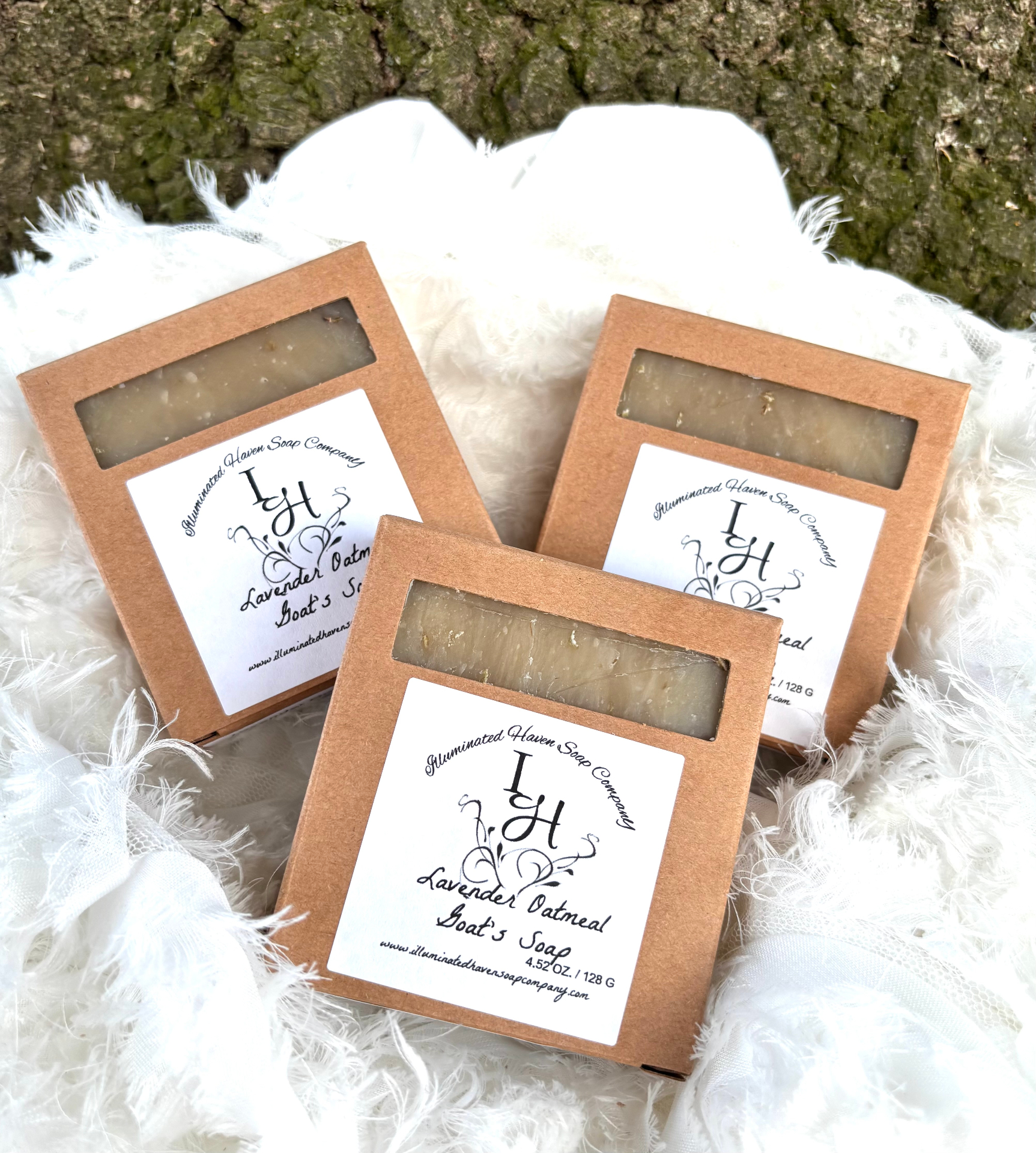
Goat's milk soap has a reputation that runs ahead of any honest explanation. It gets described in language no soapmaker should use, and the genuinely interesting part — what milk does to a batch of soap — usually gets skipped entirely.
So here is the plain version: what goat's milk contributes, what it does not, and how a true soap differs from the cleansing bars most people grew up with.
What goat's milk does in the pot
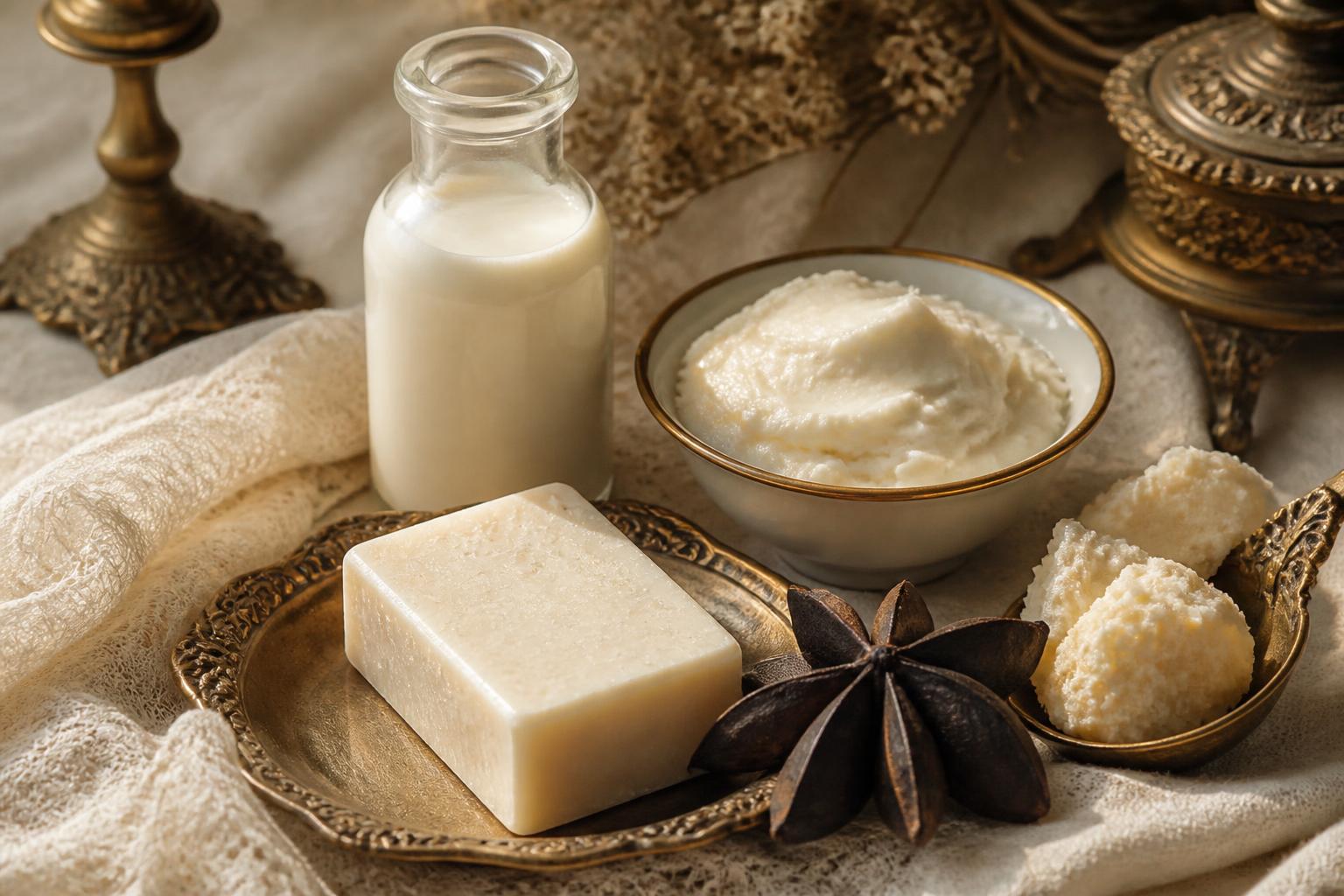
In a cold-process recipe, goat's milk replaces some or all of the water. Because milk carries its own fats, sugars, and proteins into the batch, the finished bar behaves differently from the same recipe made with water alone.
The most noticeable difference is the lather. Milk bars tend to produce a creamier, lower, denser foam rather than a light and airy one. The bar also tends to feel softer against the skin as you wash — less squeak, more slip. And the milk sugars give the soap a warm ivory or tan tone naturally, without any colorant.
Those milk sugars are also why milk soap is harder to make well. Sugar heats up when it meets lye, so the milk has to be kept cold and the batch watched closely, or the whole thing scorches and turns orange. It is a slower process than a plain water batch, which is one reason goat's-milk bars are more common at a maker's table than on a supermarket shelf.
What goat's milk does not do
Soap is a rinse-off product. It goes on, it lifts oil and dirt, it washes down the drain. No soap — ours included — treats, cures, prevents, or heals any skin condition, and we will not tell you otherwise. Anyone who does is selling you something other than soap.
What a well-made milk bar can honestly offer is a gentler, creamier wash than a harsh detergent bar, with a short and readable ingredient list. That is a real difference, and it does not need embellishment.
True soap vs. a conventional cleansing bar
Much of what is sold in the drugstore as soap is technically a synthetic detergent bar. It is built from surfactants, hardeners, foaming agents, chelators, and preservatives designed to survive years in a warehouse and to hit a price point.
True soap is the older thing: oils and butters combined with sodium hydroxide and a liquid, left to saponify until the lye is fully consumed. Saponification also produces glycerin, and in handmade soap that glycerin stays in the bar. Large-scale manufacturing often removes it, because glycerin is valuable in other products.
The other structural difference is time. Ours cure for at least four weeks before they are sold. A commercial bar is extruded, stamped, and boxed the same day.
How to read the label yourself
You do not have to take anyone's word for it. On a true soap you will see recognizable oils and butters — olive, coconut, beef tallow, kokum, cocoa, castor — along with water or goat's milk, sodium hydroxide, and any clay, mica, or fragrance used for color and scent.
On a detergent bar you will typically see sodium lauryl or laureth sulfate, sodium cocoyl isethionate, EDTA, and a preservative system. Neither list is a moral verdict. But they are different products, and only one of them is soap.
One more tell: if the package says beauty bar, cleansing bar, or deodorant bar rather than soap, that wording is usually deliberate.
Which of ours should you try?
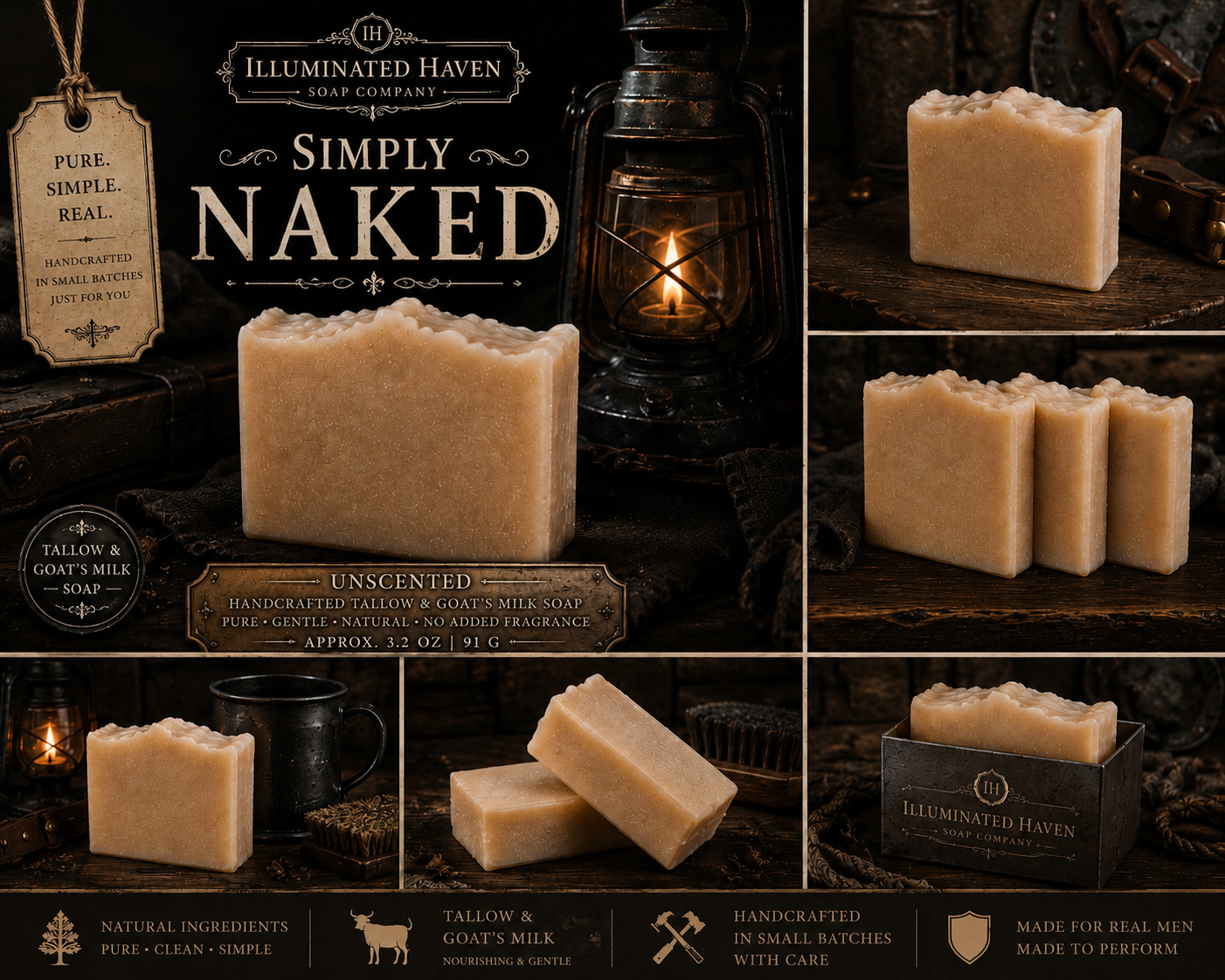
If a creamy, mild lather is what you are after, start with one of our goat's-milk bars. If you want the hardest, longest-lasting bar we make, look at the tallow-and-kokum recipes. If you would rather have nothing added for scent or color at all, Simply Naked is the fragrance-free bar, and it is a true soap made the same way as the rest.
Common questions
- Does goat's milk soap smell like goat's milk?
- No. A properly made milk bar smells like whatever fragrance was used, or like almost nothing at all in an unscented recipe.
- Is goat's milk soap vegan?
- No — goat's milk is an animal product, and several of our recipes also contain beef tallow. Each product page lists its full ingredients so you can choose accordingly.
- Why is handmade soap more expensive than a drugstore multipack?
- Small batches, premium oils and butters, a four-week minimum cure, and hand cutting and labeling. You are paying for the recipe and the time rather than for the scale.
Illuminated Haven Soap and Candle Company
Handmade soap shipped to you from southern Illinois.